











Laser rangefinders have become essential tools in industries such as surveying, engineering, electric power, forestry, security, emergency response, hunting, and environmental monitoring. While most users appreciate their speed and accuracy, many are curious about how laser rangefinders actually work.
This article explains the science behind laser distance measurement, the core technologies used in ONICK Laser Rangefinders, and why they deliver precise, reliable performance in demanding professional applications.
What Is a Laser Rangefinder?
A laser rangefinder is an optical measuring device that calculates the distance between the user and a target by emitting a laser beam and measuring the time it takes for the reflected signal to return.
Unlike traditional tape measures or optical estimation methods, laser rangefinders provide fast, non-contact, and highly accurate measurements, making them ideal for long-distance applications.
The Basic Working Principle
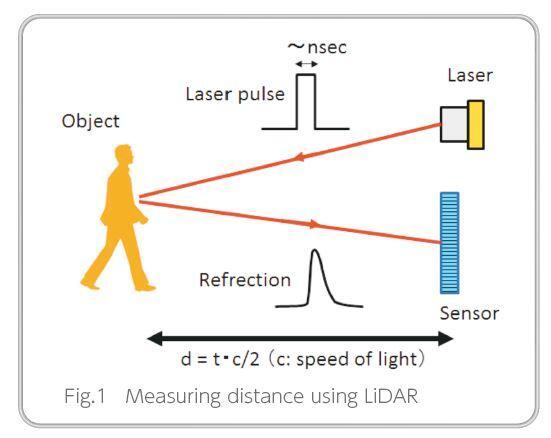
The operation of a laser rangefinder can be summarized in four simple steps:
Step 1 – Laser Emission
The device emits a narrow infrared laser pulse toward the selected target.
The laser travels at nearly the speed of light, ensuring rapid measurement.
Step 2 – Reflection
When the laser beam reaches the target, it reflects back toward the receiver inside the rangefinder.
Better reflective surfaces generally produce stronger return signals.
Step 3 – Signal Detection
A highly sensitive optical sensor detects the returning laser pulse.
Advanced electronic circuits filter environmental interference, including:
Sunlight
Fog
Dust
Rain
Background reflections
Step 4 – Distance Calculation
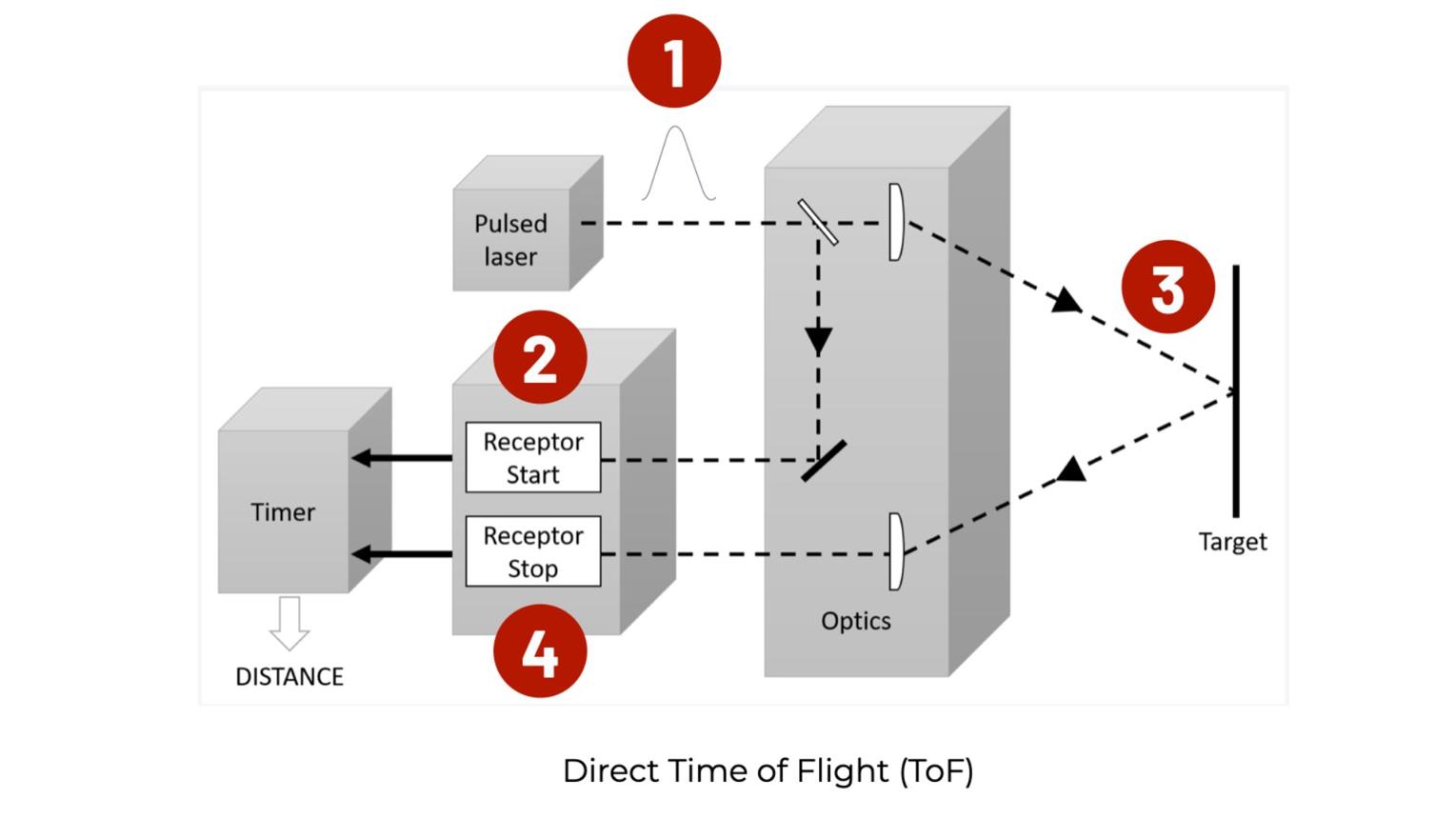
The processor calculates the travel time of the laser pulse using the Time of Flight (TOF) principle.
The distance is determined using the formula:
Distance = (Speed of Light × Travel Time) ÷ 2
The division by two accounts for the laser traveling to the target and back to the device.
Time of Flight (TOF) Technology
Most professional ONICK Laser Rangefinders use Time of Flight (TOF) technology.
Advantages of TOF
Extremely fast measurement
Long-distance capability
High accuracy
Stable performance
Low power consumption
TOF technology enables some professional ONICK models to measure targets several kilometers away while maintaining reliable accuracy.
High-Quality Optical System
Laser performance depends not only on electronics but also on optical quality.
ONICK integrates premium optical components, including:
Fully Multi-Coated (FMC) lenses
High-transmission prism systems
HD optical imaging
Wide field of view
Excellent color fidelity
Comfortable eye relief
These features help users quickly locate distant targets before initiating measurement.
Intelligent Measurement Modes
Modern ONICK laser rangefinders include multiple measurement modes to support different industries.
Common functions include:
Line-of-Sight Distance
Measures the direct distance between the user and the target.
Horizontal Distance
Calculates the horizontal distance when measuring on slopes or uneven terrain.
Ideal for:
Construction
Forestry
Hunting
Surveying
Vertical Height
Calculates the height of buildings, trees, towers, and other structures without requiring physical access.
Angle Measurement
Measures the angle between the user and the target.
Useful for:
Utility inspection
Mountain surveying
Golf
Hunting
Continuous Scan Mode
Provides real-time distance updates while tracking moving targets or scanning multiple objects.
Speed Measurement
Some ONICK models can determine the speed of moving targets, making them suitable for traffic enforcement, industrial inspection, and specialized applications.
Factors That Affect Measurement Accuracy
Several environmental and target conditions influence ranging performance.
Target Reflectivity
Highly reflective surfaces produce stronger laser returns.
Examples:
Metal structures
Road signs
Buildings
Dark-colored or soft materials may reduce effective measurement distance.
Weather Conditions
Environmental factors such as:
Heavy rain
Dense fog
Snow
Dust storms
can reduce laser transmission efficiency.
Professional ONICK laser rangefinders incorporate advanced signal processing algorithms to maintain reliable performance under challenging conditions.
Target Size
Larger targets generally provide stronger reflected signals than small objects.
Ambient Light
Bright sunlight may reduce signal strength.
ONICK devices use intelligent filtering technology to minimize interference and improve measurement stability.
Why Professionals Choose ONICK
ONICK Laser Rangefinders are designed to deliver dependable performance across a wide range of professional industries.
Key advantages include:
High-precision laser measurement
Advanced TOF technology
Premium optical engineering
Long-distance ranging capability
Rugged outdoor construction
Waterproof and dust-resistant housing
Intelligent measurement modes
Factory-direct manufacturing
OEM & ODM services
Global technical support
Applications of ONICK Laser Rangefinders
ONICK products are widely used in:
Power transmission inspection
Land surveying
Construction engineering
Forestry management
Emergency rescue
Fire protection
Border security
Marine operations
Wildlife observation
Hunting
Golf
Industrial inspection
Frequently Asked Questions
How accurate are ONICK laser rangefinders?
Depending on the model and operating conditions, ONICK laser rangefinders provide high-precision measurements suitable for professional surveying, engineering, and industrial applications.
Can laser rangefinders work in the rain?
Yes. Most ONICK professional models feature waterproof construction and advanced signal processing, allowing them to operate in light rain and challenging outdoor environments. However, extremely heavy rain or dense fog may reduce maximum measurement distance.
Can a laser rangefinder measure tree height?
Yes. Models equipped with angle measurement and height calculation functions can determine tree height without direct access.
Is laser measurement safe?
Professional laser rangefinders are designed to comply with internationally recognized laser safety standards for normal operation. Users should always follow the product manual and avoid intentionally directing the beam toward people's eyes.
Conclusion
Laser rangefinders have transformed the way professionals measure distance, height, and angle across numerous industries. By combining Time of Flight technology, premium optical systems, and intelligent measurement algorithms, ONICK Laser Rangefinders provide fast, reliable, and highly accurate performance for field operations.
Whether you are inspecting power infrastructure, surveying land, managing forests, conducting emergency rescue, or exploring the outdoors, ONICK delivers precision measurement solutions you can trust.