









In traffic monitoring, radar speed measurement and laser speed measurement are both commonly used speed measurement equipment. Although their purpose is the same - to measure the driving speed of a vehicle, their working principles, usage scenarios and measurement accuracy are quite different. Understanding their differences will not only help you better understand technological approaches to traffic management, but will also make you more alert while driving. Next, let’s take a closer look and help you understand the difference between radar speed measurement and laser speed measurement in seconds.
1. Differences in working principles
#Radar speed
Radar speed measurement uses radio frequency waves (usually microwaves) to measure the speed of an object. When radar equipment emits microwave signals, these signals will hit moving objects in front (such as cars) and then be reflected back. By measuring the frequency difference between the reflected and emitted waves (also called the Doppler effect), a velocimeter can calculate the speed of an object.
* Longer wavelength, suitable for long-distance monitoring.
* Can detect multiple targets and measure the speed of different vehicles.
#Laser speed measurement
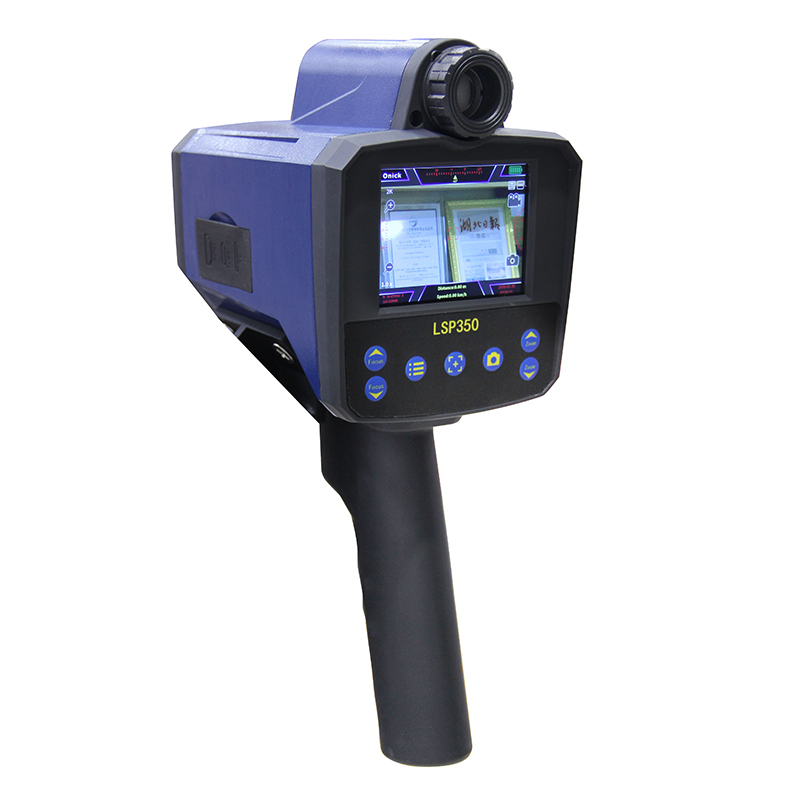
Laser speed measurement uses a laser beam (infrared light) to measure the speed of an object. Laser speedometers emit a very narrow beam that is pointed precisely at the target object. When a vehicle passes by, the laser beam will be reflected back. The device calculates the change in distance between the vehicle and the device by measuring the time it takes to reflect back, and then calculates the speed of the vehicle.
* Shorter wavelength provides very accurate distance measurement.
*Laser beams are usually very narrow, can only measure the speed of one target at the same time, and need to be aimed at the target very accurately.
2. Differences in accuracy and scope of application
#Radar speed
The advantage of radar speed measurement is that it can work over longer distances and has moderate speed measurement accuracy. Usually, the effective distance of radar speed measurement can reach several hundred meters, and it is suitable for relatively open road sections such as highways. Because it can detect multiple targets at the same time, it is suitable for places with large traffic flow.
* Advantages: Suitable for long-distance and high-speed driving; capable of detecting multiple vehicles at the same time.
* Disadvantages: The accuracy of speed measurement is worse than that of laser speed measurement, and it is easily interfered by the surrounding environment (such as other vehicles, weather conditions, etc.).
#Laser speed measurement
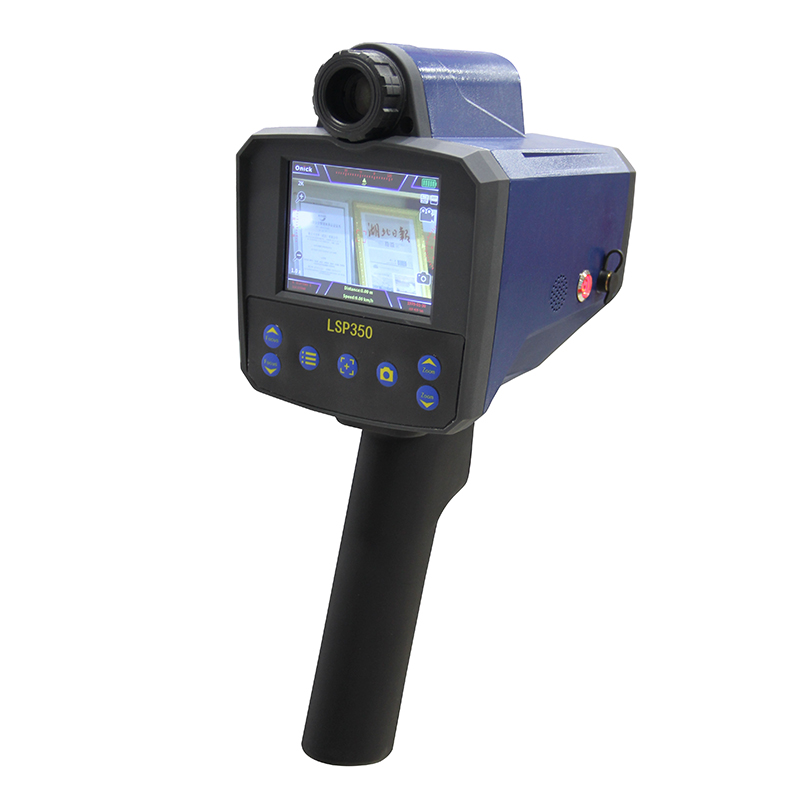
Laser speed measurement has higher accuracy, with an error usually within ±1 km/h, which is especially advantageous when driving at high speeds. The detection range of the laser speedometer is generally short, but because it can accurately point to the target, it is very suitable for bicycle speed measurement, such as monitoring the speed of a certain vehicle on complex urban roads.
* Advantages: High precision, accurate positioning, especially suitable for speed measurement of a single target.
* Disadvantages: The detection range is short, precise target alignment is required, and it is usually not possible to measure multiple vehicles at the same time on busy roads.
3. Differences in operation methods
#Radar speed
Radar speed measuring equipment is usually fixed or handheld by traffic police. Fixed radar speed measuring equipment is usually installed on the roadside and can automatically detect the speed of passing vehicles around the clock. Handheld radars are held by traffic police for speed measurement and are often used for patrols or fixed-point monitoring.
* Easy to operate: Once installed or used by the traffic police, it is relatively easy to operate.
* No need for precise alignment: The device does not need to be directly aligned with the target. When measuring speed, it only needs to be aligned with the entire road section.
#Laser speed measurement
Laser speed measuring equipment is usually handheld and operated by traffic police. Due to the accuracy of the laser beam, traffic police need to accurately target the target vehicle to measure the speed. Therefore, laser speed measurement relies more on the traffic police's operating skills and precise aiming of the target.
* Operation Difficulty: The traffic police handheld device needs to be pointed at a specific vehicle, and the operation is relatively complicated.
* High Accuracy: Due to its precise target pointing, it is suitable for single target detection.
4. Degree of interference
#Radar speed
Radar speed measurement is easily affected by surrounding interference. For example, when multiple vehicles pass by at the same time, the radar may incorrectly read the speed of other vehicles, or be affected by other factors (such as weather, reflections from buildings, etc.), resulting in inaccurate speed measurement results.
* Sources of interference: weather, buildings, other vehicles.
* Response speed: Radar responds quickly to rapidly changing traffic conditions, but may lose accuracy in high-traffic environments.
#Laser speed measurement
Laser speed measurement has high accuracy and is not susceptible to interference. It can accurately lock on the target and is insensitive to reflections from other interfering objects. Since the laser beam is very narrow, it almost only illuminates the target vehicle, so there is less interference in laser speed measurement in complex environments.
* Less Susceptible to Interference: Laser precision reduces errors.
* Target restriction: Usually it can only aim at one car, and surrounding vehicles will not affect the speed measurement results.
5. Differences in legal effect
Although radar speed measurement and laser speed measurement are both commonly used traffic speed measurement tools, laser speed measurement is considered to be more legally valid evidence in courts in some countries and regions due to its high accuracy and low error. Traffic law enforcement in many places prefers to use laser speed measuring equipment, especially when it comes to determining speeding tickets.
Summary
* Radar speed measurement: It is suitable for long-distance and large-scale speed measurement, and can monitor multiple vehicles at the same time. However, the accuracy is low and it is susceptible to interference. It is suitable for use in situations with large traffic flow.
* Laser speed measurement: High accuracy, suitable for precise speed measurement of a single target, especially suitable for complex road conditions and precise positioning of targets, with less interference, but the operation requires precise alignment.
By understanding the difference between the two, we can look at the operation of traffic speed measurement technology more rationally. When driving, understanding the characteristics of speed measuring tools can help us be more alert, comply with traffic laws, and avoid unnecessary trouble.
If you have any questions about speed devices or traffic rules, feel free to let me know!