











With the development of science and technology, traffic monitoring and safety management continue to improve, and laser speedometers have become an important tool in modern traffic monitoring. With its high precision and high positioning accuracy, laser speedometers are widely used in the research of traffic speed measurement, vehicle speed detection and positioning and orientation technology. This article will deeply discuss the high-precision positioning and orientation technology based on laser speedometer, its working principle, application scenarios and future development direction.
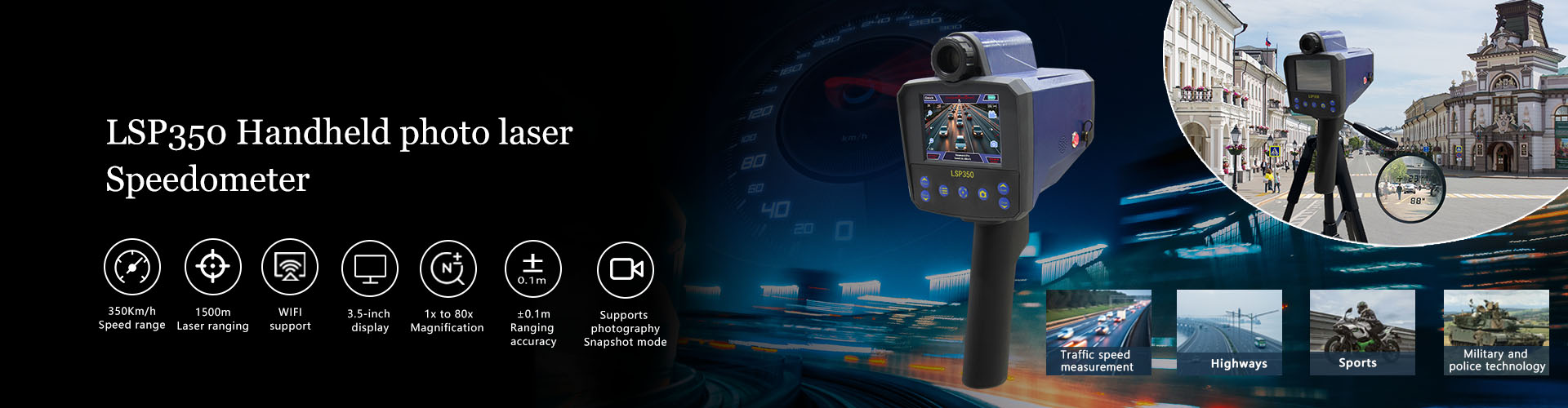
1. Working principle of laser speedometer
Laser Speed Detection System achieves speed detection of target objects by emitting and receiving laser beams. The short wavelength of the laser beam provides very high measurement accuracy and spatial resolution. The specific working principle is as follows:
* Emit laser beam: The laser speedometer emits a precise laser beam onto the surface of the target object (such as a car).* Reflected signal return: The target object reflects the laser signal, and the speedometer receives the returned laser signal.* Calculate time difference: By calculating the time difference between the emission and return of the laser beam, and the movement of the target object, the speedometer can calculate the speed of the target through a formula.
The biggest difference between the laser speedometer and the radar speedometer lies in its extremely short wavelength and strong directivity, which enables the laser speedometer to achieve high-precision target measurement and positioning.
2. Principle of high-precision positioning and orientation technology
High-precision positioning and orientation technology refers to accurately determining the position, direction and speed of the target object through a laser measurement system. The core of this technology lies in precise positioning and efficient directional control, which mainly involves the following key technologies:
2.1 Laser beam pointing and positioning accuracy
The laser beam of the laser speedometer is extremely directional and can accurately point and lock on the target. By measuring the displacement or angle change of the target within the laser beam irradiation area, high-precision positioning can be achieved. Positioning errors are typically on the centimeter level, which is much higher than traditional radar speed measurement technology. Because the laser beam is precisely focused, it can measure the precise position of an object in three-dimensional space.
2.2 Laser beam reflection and time difference
The laser speedometer accurately calculates the speed, distance and position of the target object by measuring the emission time and return time difference of the laser beam (that is, the time for the reflected signal to reach the receiver), combined with the reflection characteristics of the object (such as reflection angle, surface smoothness, etc.). This measurement method can avoid the common multi-target interference problem in traditional radar speed measurement.
2.3 Multi-point laser synchronous positioning technology
In order to further improve positioning accuracy, modern laser speedometers adopt multi-point synchronous laser measurement technology, which tracks targets simultaneously through multiple laser points. Multiple laser points can monitor the position changes of the target in real time and form a three-dimensional coordinate system, thereby achieving accurate capture of the target's motion trajectory. Through this technology, the laser speedometer can not only measure the speed of the target, but also provide information on the direction and displacement of the target's movement, greatly improving positioning accuracy.
3. Application scenarios of laser speed measurement and positioning
High-precision positioning and orientation technology based on laser velocimeter has achieved significant applications in many fields:
3.1 Traffic monitoring and law enforcement
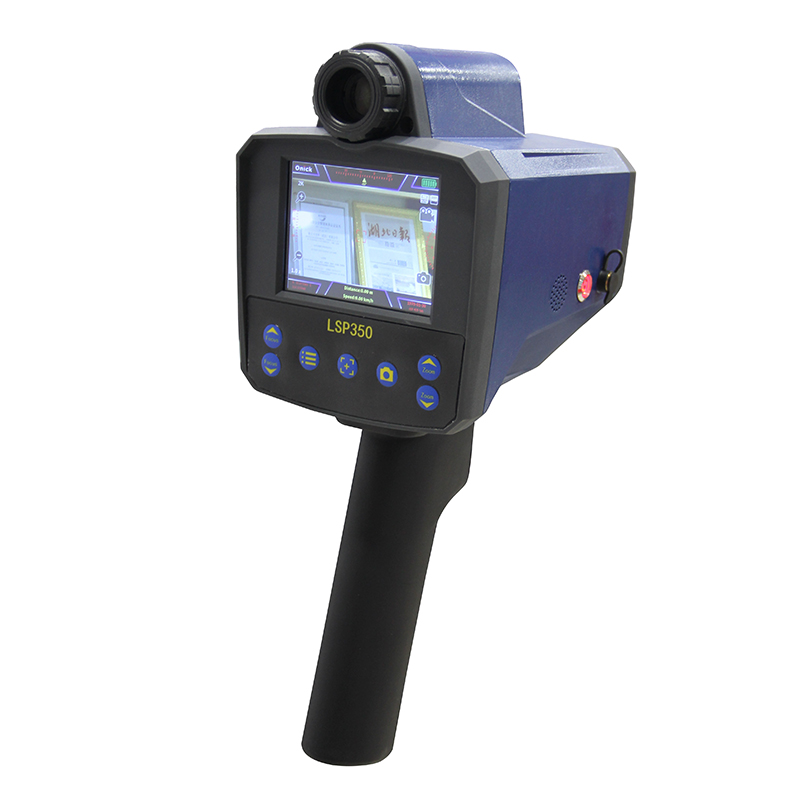
Laser speedometers are widely used in national traffic law enforcement, especially in national highways, urban streets, and other places to accurately measure the speed of vehicles. Compared with traditional radar speedometers, laser speedometers can provide higher accuracy in complex environments. It can not only accurately measure the speed of a single target vehicle, but also provide the location, direction and trajectory of the vehicle to help law enforcement officers better conduct traffic monitoring and speed control.
3.2 Driverless Cars
Laser speed measurement and positioning and orientation technology is also one of the core technologies of laser radar (LIDAR) for driverless cars. Self-driving cars use lidar to scan and position the environment, which not only enables real-time obstacle detection but also enables accurate planning of driving routes. This high-precision positioning technology can help driverless cars drive safely in complex urban environments and reduce the occurrence of traffic accidents.
3.3 Aviation and Aerospace
Laser speedometers also play an important role in the fields of aviation and aerospace. In some space missions, laser velocity measurement technology is used to accurately position satellites or spacecrafts. For example, laser rangefinders can help determine the relative speed and position of a spacecraft, supporting complex operations such as space station docking or orbit correction.
3.4 Precision Measurement and Industrial Applications
Laser speed measurement and positioning technology is also widely used in precision industrial measurement, such as machining, robot path planning, automated production lines, etc. By accurately measuring the position and movement trajectory of objects, laser positioners can ensure precise docking of equipment and workpieces, greatly improving production efficiency and product quality.
4. Technical challenges and development trends
Although high-precision positioning and orientation technology based on laser velocimeter has achieved significant applications in many fields, there are still some technical challenges:
4.1 Environmental interference issues
The performance of the laser speedometer may be affected by environmental factors, especially under adverse weather conditions such as rain, snow, haze, etc., the laser signal may be partially absorbed or scattered, thereby reducing the measurement accuracy. In some complex environments, how to maintain stable speed measurement accuracy is still a technical problem.
4.2 Cost Issue
The research and development costs of laser speedometers and related technologies are relatively high, especially when high-precision requirements are required, and the equipment costs often increase accordingly. Therefore, how to reduce costs and improve production efficiency is still an important issue in the development of the industry.
4.3 Data processing and real-time
The amount of data generated by the laser speedometer is very large. Especially when applying multi-point synchronous positioning technology, how to process this data quickly and accurately to ensure real-time response and feedback is also an urgent problem to be solved.
5. Conclusion
High-precision positioning and orientation technology based on laser speedometers, with its high precision, strong directivity and anti-interference capabilities, has shown great application potential in many fields such as traffic monitoring, driverless driving, and aerospace. With the continuous advancement of technology, laser speed measurement technology will become more mature in future development, gradually overcome the current challenges, and promote innovation and development in fields such as intelligent transportation and automated production.
The high-precision positioning and orientation functions of laser speed measurement technology are not only the embodiment of modern technology, but also an important force in promoting the process of intelligence and automation. We have reason to believe that with the development of laser technology, its applications will become more extensive and change the way we live and work.
If you have more questions about laser speedometers or other high-precision positioning technologies, please feel free to ask me!