










Night vision technology has revolutionized how we see in low-light or complete darkness. Whether it's for military, security, wildlife observation, or recreational purposes, night vision devices allow users to navigate the dark by amplifying light or detecting infrared radiation. In this article, we’ll explore how night vision works, the types of technology behind it, and the different types of night vision devices available.
1. The Basics of Night Vision Technology
Night vision devices allow humans to see in low-light conditions by either amplifying ambient light or detecting infrared light (which is invisible to the naked eye). These devices don’t create light, they just make existing light sources more visible to the user.
There are two main types of night vision technology:
Image Intensification: This is the traditional technology used in most night vision devices, amplifying ambient light (like moonlight or starlight).
Thermal Imaging: This uses heat signatures instead of visible light to create an image, and is often used in more advanced or specialized devices.
Let’s break each of these down in more detail.
2. Image Intensification: Amplifying Ambient Light
Most night vision devices, such as night vision goggles (NVGs) or monoculars, use image intensification. This process involves collecting light from the environment and increasing its intensity to produce a visible image.
How Image Intensification Works:
Light Capture:
The device’s lens collects light from the surroundings. This light can be ambient light (such as starlight or moonlight), or light from artificial sources like street lamps or vehicle headlights. The lens gathers both visible light and some near-infrared (NIR) light, which is invisible to the human eye but detectable by night vision technology.Photocathode:
The collected light is directed to a photocathode, a light-sensitive component that converts the light photons into electrons. This is the initial step in the amplification process.Electron Acceleration:
The electrons are then accelerated in a vacuum tube (a part of the night vision device). This occurs inside a special tube known as the image intensifier tube. By speeding up the electrons, they gain energy, which allows them to multiply in number.Microchannel Plate (MCP):
The electrons travel through a microchannel plate, which consists of thousands of tiny glass channels. As the electrons pass through the plate, they collide with the walls, creating even more electrons—this is the amplification phase. The number of electrons increases many times over, boosting the light signal.Phosphor Screen:
The electrons are then directed at a phosphor screen, which emits visible light when the electrons hit it. The result is a greenish image (because of the phosphor used) that represents the amplified version of the scene. The green color is not arbitrary; it’s chosen because the human eye can distinguish shades of green better than any other color, providing optimal clarity and contrast.Output:
Finally, the amplified image is displayed on the viewfinder or eyepiece of the night vision device, allowing the user to see in low-light conditions. The entire process happens almost instantaneously, allowing for real-time viewing.
Key Features of Image Intensification:
Enhanced Visibility in Low Light: This system works in environments with little ambient light, such as at night, in caves, or in shaded areas.
Limitations: It requires at least some available light (moonlight, starlight, or artificial lighting). It doesn't work in total darkness unless infrared illumination is used.
3. Thermal Imaging: Detecting Heat Signatures
Unlike image intensification, which amplifies light, thermal imaging works by detecting the heat emitted by objects. Everything with a temperature above absolute zero emits infrared radiation, which is invisible to the human eye but can be detected by thermal cameras.
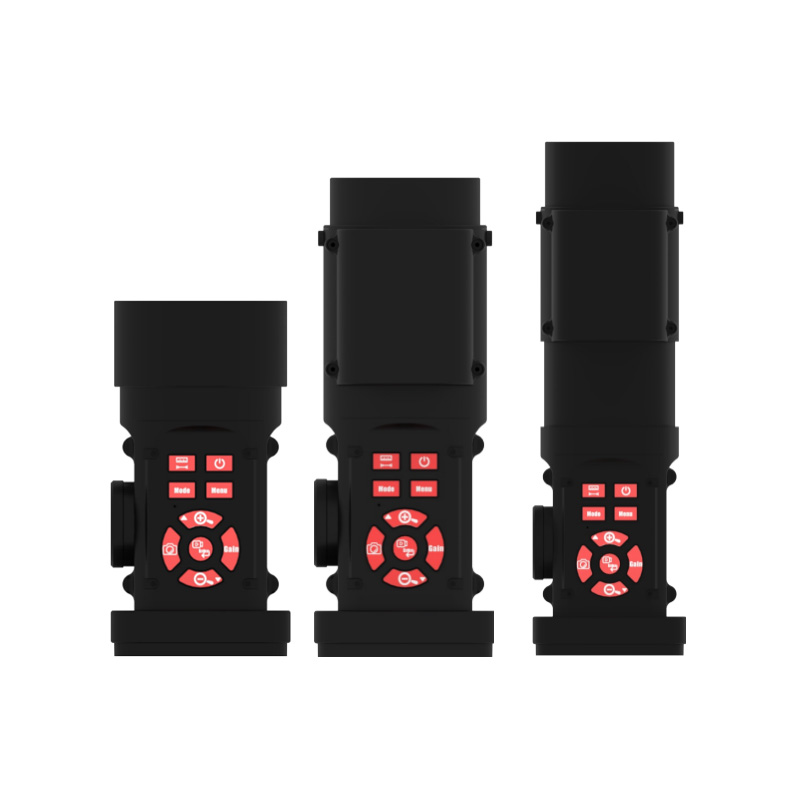
How Thermal Imaging Works:
Heat Detection:
Thermal imaging cameras detect infrared radiation (heat) emitted by objects and living beings. Even in total darkness, thermal imaging can create a clear image because the technology detects the heat differential between the object and its environment.Infrared Sensor:
The thermal sensor in the camera absorbs the infrared radiation, which is then converted into an electrical signal. The sensor is made of a material that can detect minute variations in heat.Image Processing:
The signal is processed by the camera’s electronics, which converts the temperature differences into a visual image. Warmer objects, like humans or animals, appear brighter (often in red or orange hues), while cooler objects, like trees or buildings, appear darker (in blue or purple hues).Display:
The processed image is then displayed on a screen, allowing the user to visualize the heat signatures in the scene. This technology is often displayed in false color palettes to make it easier for the human eye to differentiate temperature gradients.
Key Features of Thermal Imaging:
Works in Complete Darkness: Thermal imaging doesn’t need any light source—just the heat emitted by objects. It can detect heat signatures in pitch-black conditions, fog, smoke, and even through light foliage.
Clear Heat Signatures: Thermal cameras are excellent at detecting people or animals in otherwise obscure conditions, such as at night or in smoke-filled environments.
Limitations: While thermal imaging is excellent for detecting heat sources, it doesn’t provide the fine detail that image intensification does. It’s best for locating living things or objects with different temperatures from their surroundings.
4. Different Types of Night Vision Devices
There are several types of night vision devices that make use of image intensification or thermal imaging. Each type has its own strengths and ideal use cases:
Night Vision Goggles (NVGs): These are worn over the eyes like a pair of goggles. They are commonly used in military, law enforcement, and security settings, as well as for recreational activities like hunting or tactical shooting.
Monoculars: Smaller and lighter than binoculars, monoculars are portable night vision devices that allow for one-eye viewing.
Binoculars: These provide a wider field of view and depth perception, making them more comfortable for extended use.
Scopes: Night vision scopes are often attached to rifles or cameras for specific applications, such as hunting or surveillance.
Thermal Cameras: These devices are used for detecting heat signatures. They are often employed in search and rescue missions, wildlife monitoring, or military operations.
5. Advantages and Limitations of Night Vision Technology
Advantages:
Increased Visibility: Night vision technology significantly enhances the ability to see in low-light or no-light environments, which would otherwise be pitch black to the naked eye.
Improved Safety: NVGs allow for safer navigation in hazardous conditions, whether it’s for hiking, driving, or military operations.
Tactical Advantage: In military and law enforcement applications, night vision provides a significant advantage in terms of stealth, surveillance, and operational effectiveness.
Limitations:
Dependence on Light: Image intensification requires at least some ambient light, so it doesn’t work well in total darkness unless paired with an infrared illuminator.
Image Quality: While thermal imaging can see through smoke, fog, and darkness, it lacks the clarity and detail of image intensification in certain situations.
Cost: High-quality night vision devices, especially Gen III or thermal devices, can be expensive.
Sensitivity to Bright Lights: Prolonged exposure to bright light can damage night vision devices, particularly image intensification units.
Conclusion
Night vision works by either amplifying ambient light or detecting infrared radiation, allowing users to see in the dark. The most common technology, image intensification, amplifies available light to create a visible image, while thermal imaging detects heat signatures to produce an image based on temperature differences. Both technologies are invaluable for military, law enforcement, security, and recreational activities, each with its own unique advantages and limitations. Whether you’re using night vision to explore the outdoors, monitor wildlife, or conduct covert operations, the technology allows us to extend our ability to see beyond what the human eye can naturally perceive.