










When choosing equipment for nighttime observation, hunting, security patrol, or tactical operations, two technologies are often compared: thermal imaging scopes and night vision scopes.
While both devices help users see in low-light conditions, they operate using completely different technologies and serve different purposes. Understanding these differences can help users select the right solution for their specific applications.
What Is a Thermal Imaging Scope?
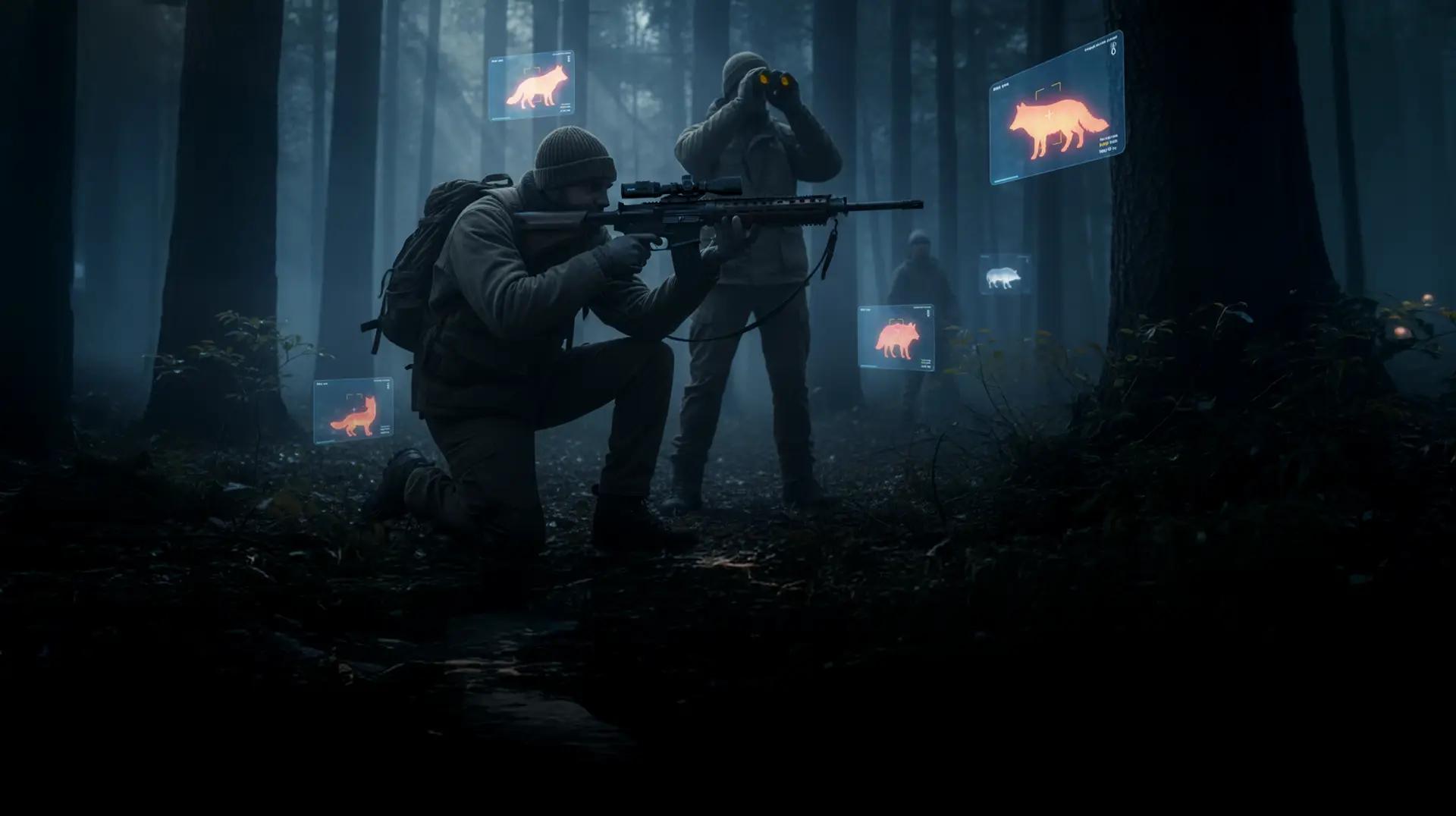
A thermal imaging scope detects infrared radiation emitted by objects and converts temperature differences into visible images.
Every living creature, vehicle, and machine generates heat. Thermal scopes use this heat information to create a thermal image, allowing users to detect targets even in complete darkness.
Key Characteristics
- Detects heat signatures
- Works in total darkness
- Effective through smoke, fog, and light vegetation
- Excellent for target detection
- Less dependent on environmental lighting
What Is a Night Vision Scope?
A night vision scope amplifies available light such as moonlight, starlight, or infrared illumination to create a visible image.
Instead of detecting heat, night vision technology enhances existing light sources, making dark environments appear brighter.
Key Characteristics
- Amplifies ambient light
- Produces detailed visual images
- Suitable for target identification
- Performs best with some available light
- Often lower cost than thermal scopes
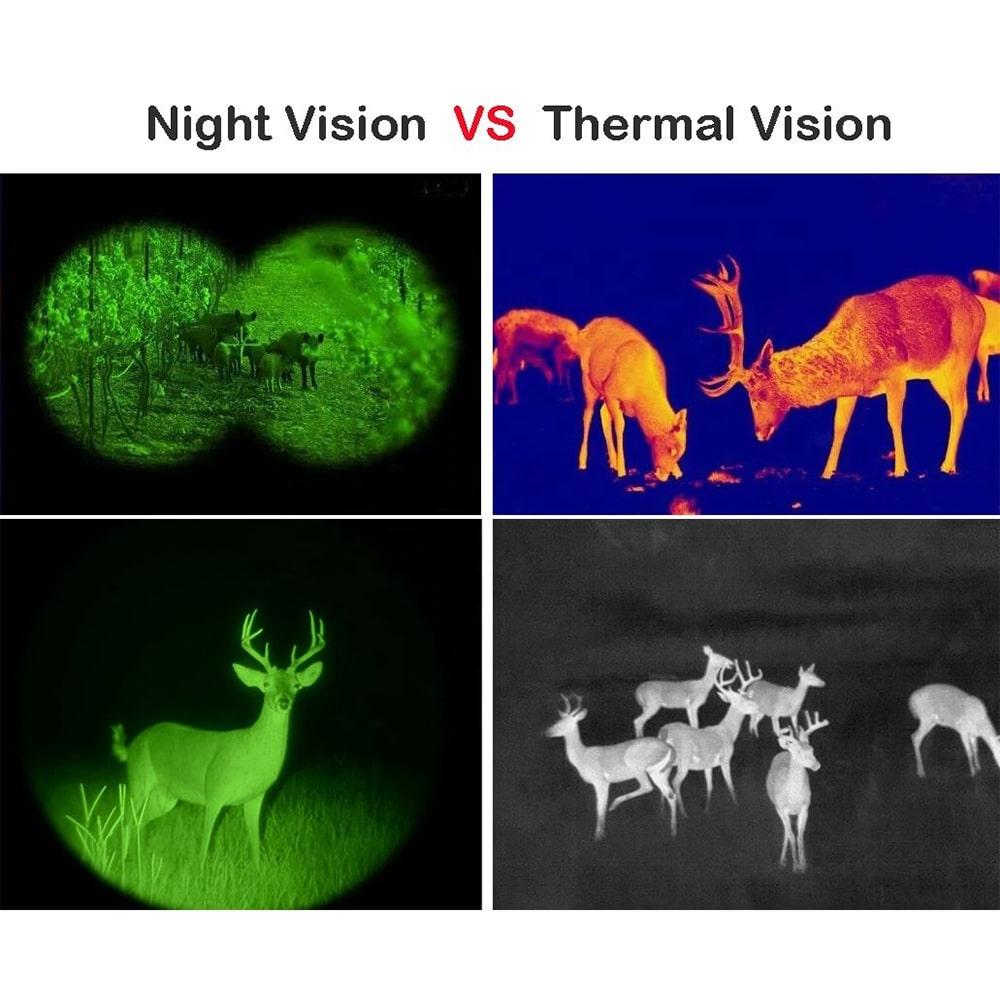
Thermal Imaging Scope vs Night Vision Scope
Detection Capability
Thermal imaging scopes excel at detecting hidden targets because they identify heat rather than visible shapes.
Animals, humans, and vehicles can be located quickly even when concealed by bushes or camouflage.
Night vision scopes may struggle if targets blend into the surrounding environment.
Winner: Thermal Imaging Scope
Image Detail
Night vision scopes typically provide more natural-looking images with recognizable shapes and details.
Thermal scopes focus on heat contrast rather than fine visual features.
Winner: Night Vision Scope
Performance in Complete Darkness
Thermal scopes operate independently of external light.
Night vision devices may require infrared illuminators in extremely dark environments.
Winner: Thermal Imaging Scope
Performance in Adverse Weather
Fog, smoke, dust, and light rain often reduce the effectiveness of traditional night vision systems.
Thermal imaging technology can detect heat signatures through many of these environmental obstacles.
Winner: Thermal Imaging Scope
Target Identification
Night vision devices often provide clearer facial features, clothing details, and environmental context.
Thermal scopes are excellent for detection but may offer less visual detail.
Winner: Night Vision Scope
Long-Range Detection
Modern thermal imaging scopes can detect large heat sources at considerable distances.
This makes them highly effective for surveillance and long-range observation.
Winner: Thermal Imaging Scope
Best Applications for Thermal Imaging Scopes
Thermal scopes are ideal for:
- Hunting in complete darkness
- Wildlife monitoring
- Search and rescue operations
- Security surveillance
- Border patrol
- Law enforcement
- Tactical missions
Their ability to rapidly locate heat-emitting targets provides a significant operational advantage.
Best Applications for Night Vision Scopes
Night vision scopes are commonly used for:
- Outdoor observation
- Tactical identification
- Navigation at night
- Wildlife observation
- Security monitoring with sufficient ambient light
Users who need greater image detail often prefer night vision technology.
Can Thermal and Night Vision Technologies Work Together?
Yes.
Many professionals use thermal imaging for initial target detection and night vision devices for target identification.
This combination delivers both rapid detection and detailed observation, maximizing operational effectiveness.
Future Development Trends
The thermal optics industry continues to advance rapidly through innovations such as:
- AI-assisted target recognition
- Higher sensor resolutions
- Improved image processing
- Integrated laser rangefinders
- Ballistic calculation systems
- Wireless data transmission
As technology becomes more affordable, thermal imaging scopes are expected to gain even wider adoption worldwide.
Conclusion
Both thermal imaging scopes and night vision scopes offer valuable capabilities, but they are designed for different tasks.
If your priority is detecting targets quickly under challenging environmental conditions, a thermal imaging scope is typically the better choice.
If detailed visual identification is more important, a night vision scope may be the ideal solution.
For professionals seeking maximum performance, combining both technologies can provide the most comprehensive situational awareness in the field.